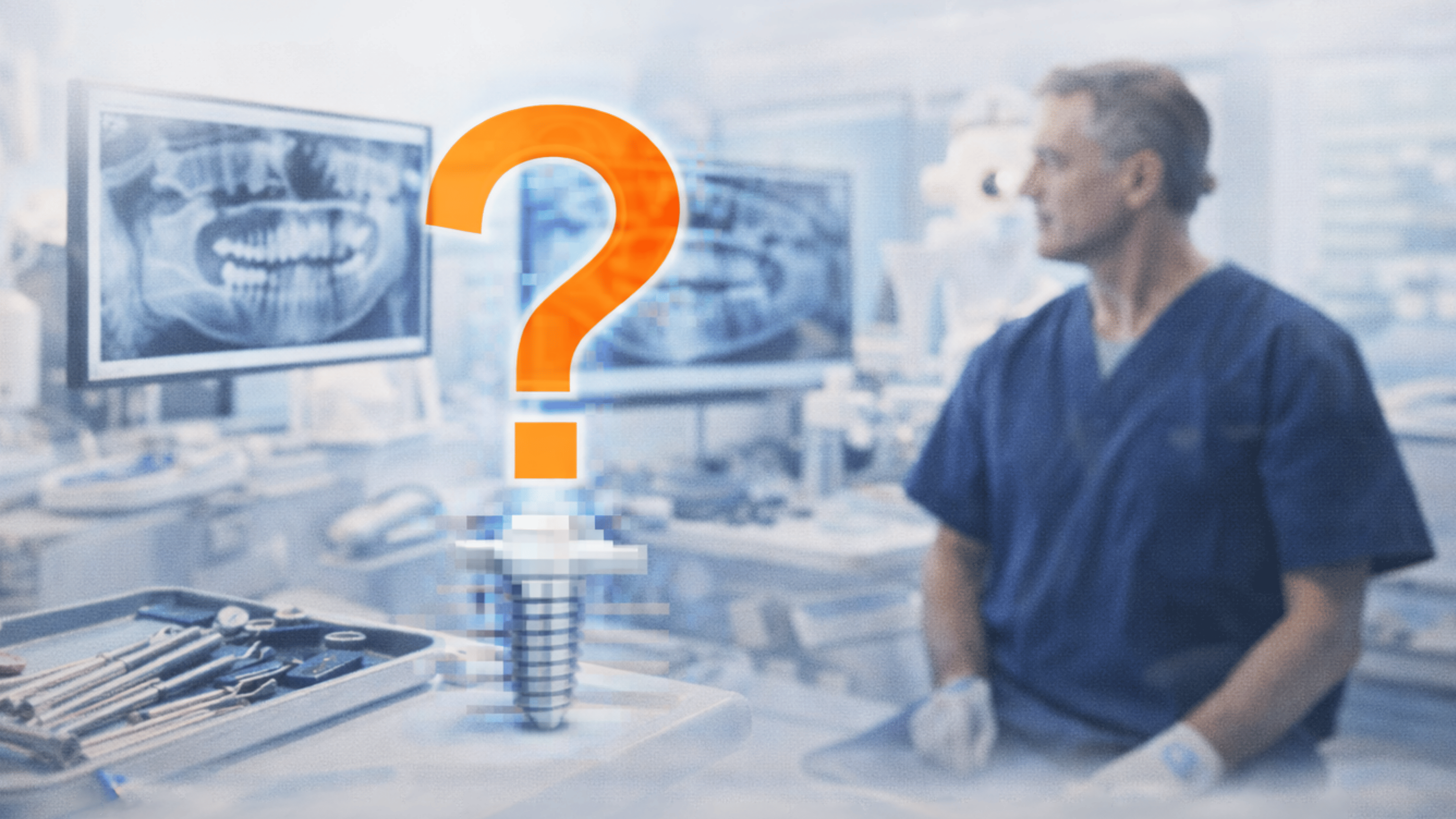
More than 15 million dental implants are placed worldwide each year. Clinically, implant dentistry has never been stronger—high survival rates, advanced digital workflows, and expanding restorative options. Yet most implants lose their identity over time. Conservative estimates suggest only 7–10% of implants can be reliably identified years later without trial-and-error or component testing. At the same time, roughly 25% of implants will eventually require identification due to restoration replacement, complications, peri-implant disease, or patient relocation.
The result?
Over 500,000 implants each year fall into an identification gray zone—where clinicians rely on radiographs, visual clues, or trial kits instead of definitive records. Ironically, the data exists. Dental labs, manufacturers, scanners, distributors, and warranty programs touch 40–60% of implant cases, yet less than 10% of that information is accessible to patients or transferable when care changes hands. Implant identity remains fragmented across proprietary systems, charts, PDFs, and emails—and is often lost when practices close or clinicians retire.
The consequences are real:
Increased chair time
Delayed treatment
Higher costs
Greater clinical risk
This is a cumulative problem. Every year adds another cohort of implants that may one day need service without reliable documentation.
The issue isn’t the implant design or clinical skill—it’s the lack of a universal, patient-centered implant identity. While planning and fabrication are fully digital, identification remains analog and siloed. Solutions like the id2 implant portal aim to change that by creating a persistent, implant-agnostic digital record that follows the patient, not the practice.
The question is no longer whether implant identification is a problem—but how long dentistry can afford to ignore it.
The invisible implant is quickly becoming one of the most significant operational challenges in modern restorative care.