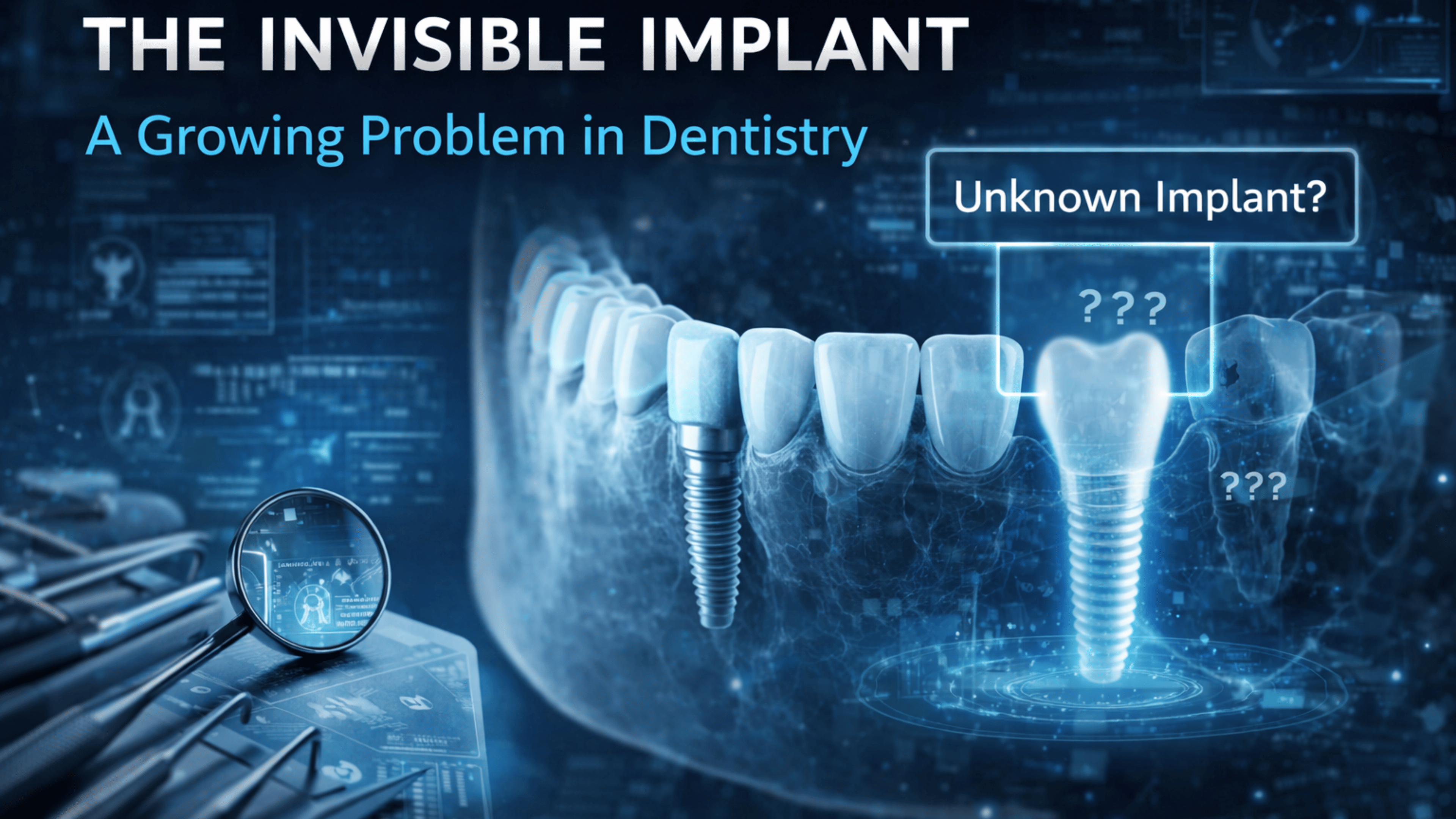
Every day, a patient sits in the chair trusting that the dental implant placed years ago can still be identified, maintained, and protected. Too often, it cannot. The implant identity is gone—no records, no component history, forcing teams to rely on X-rays, phone calls, emails, and guesswork. What should be a routine appointment turns into lost chair time, overextended staff, delayed treatment, and production revenue that quietly disappears.
This inefficiency compounds across the practice. Clinical teams pause care, front desks chase information, assistants spend hours searching instead of supporting patients, and doctors are forced to make decisions without certainty. The opportunity cost is enormous: time not spent treating patients, growing the practice, or delivering the level of care patients expect. For patients, the result is anxiety. For clinicians, frustration. For the industry, systemic waste.
This is unknown implant syndrome—a problem dentistry has long addressed reactively, only after critical information has already been erased by time. But reactive solutions no longer meet the modern standard of care. In an era where healthcare is expected to be digital, connected, and patient-centered, relying on memory, paper records, or fragmented systems is no longer acceptable. The true solution isn’t better detective work—it’s ensuring implant identity is never lost at all.
That is why the id2 Dental Implant Portal was created: to capture implant identity at the moment it matters most and preserve it securely for life. With a one-time investment, clinicians gain lifetime access to implant identity, including ongoing sharing and updates that follow the patient across providers and referrals. Brand, manufacturer, and component information are stored in a centralized, brand-neutral portal that supports continuity of care without being tied to a manufacturer while removing the administrative burden that slows office teams down.
As dentistry evolves, the ability to reliably identify and manage implants is quickly becoming a baseline expectation of quality care. The id2 portal is not a registry; it is a proactive promise and a pathway toward a higher industry standard, one that aligns patient safety, staff efficiency, and clinical confidence. Faster adoption means fewer delays, less burnout, and better outcomes for everyone involved.
The dental implant community must move past this long-standing handicap. When an implant identity is never lost, care is never delayed, efficiency is restored, and trust is preserved. With id2, implant dentistry moves beyond reaction and into prevention—becoming safer, smarter, and truly connected.